🎉 Up to 70% Off Selected ItemsShop Sale

1982 Sequential Circuits Pro-One Model 100 Vintage Monophonic Analog Synthesizer
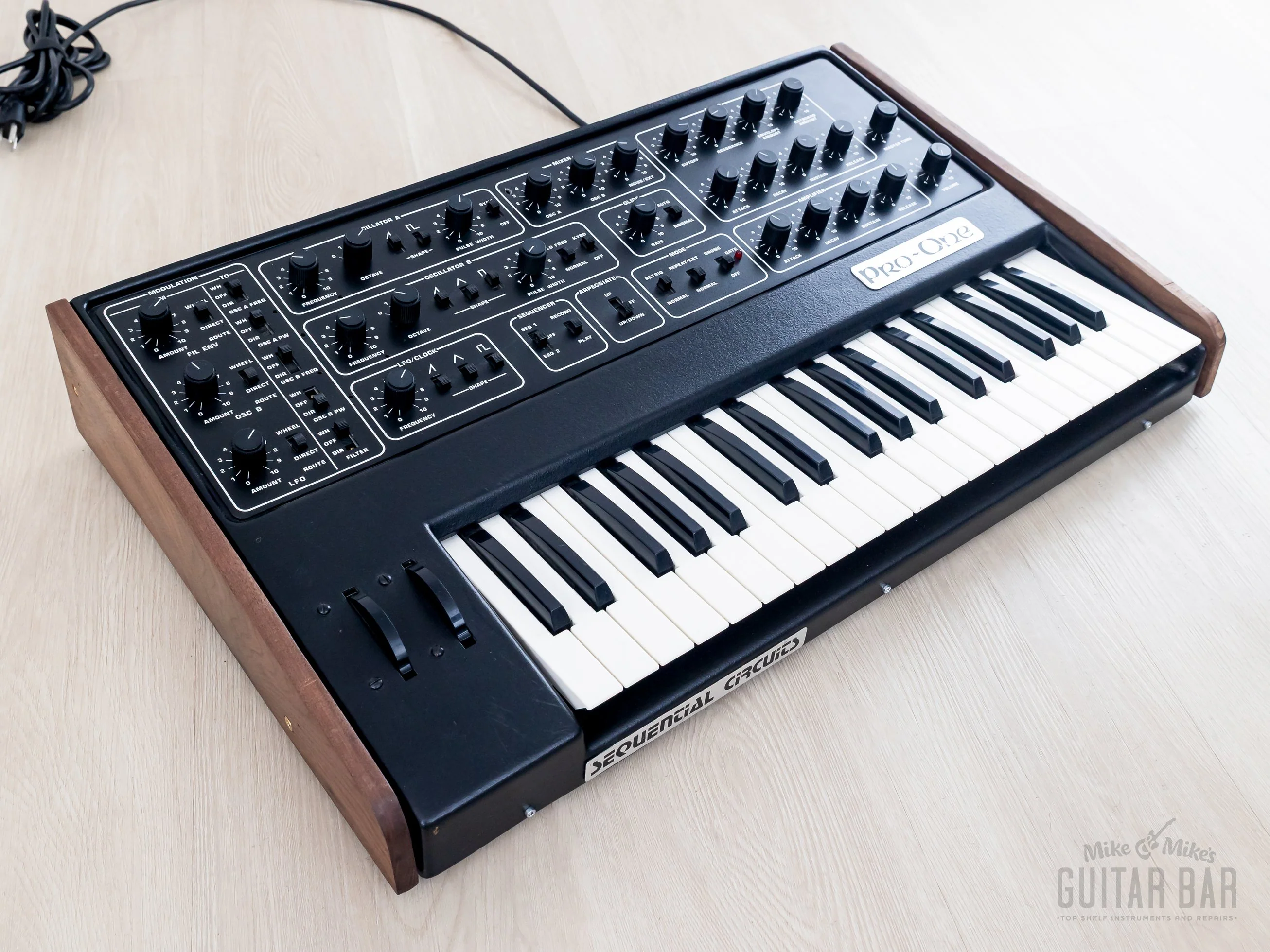
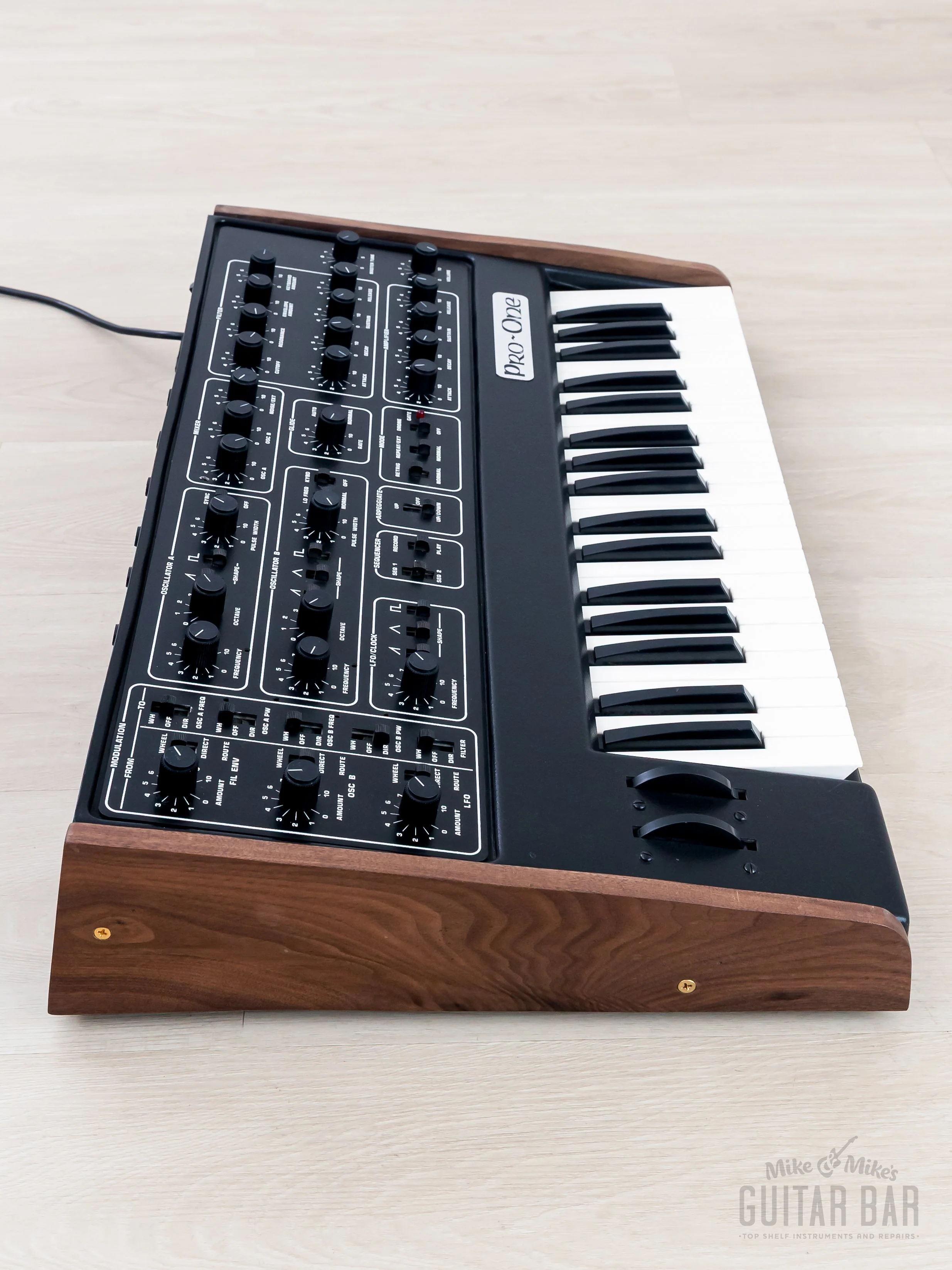
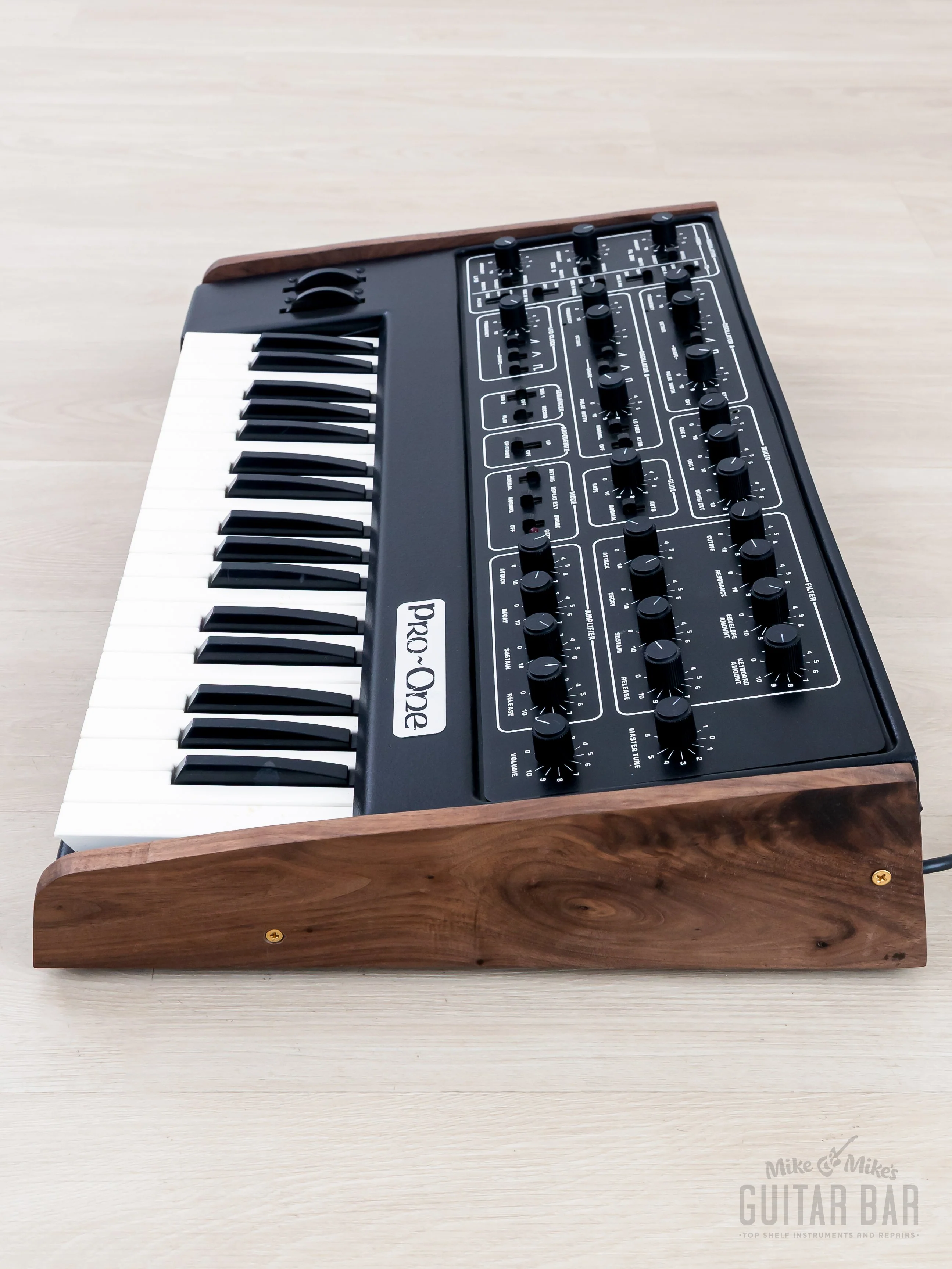
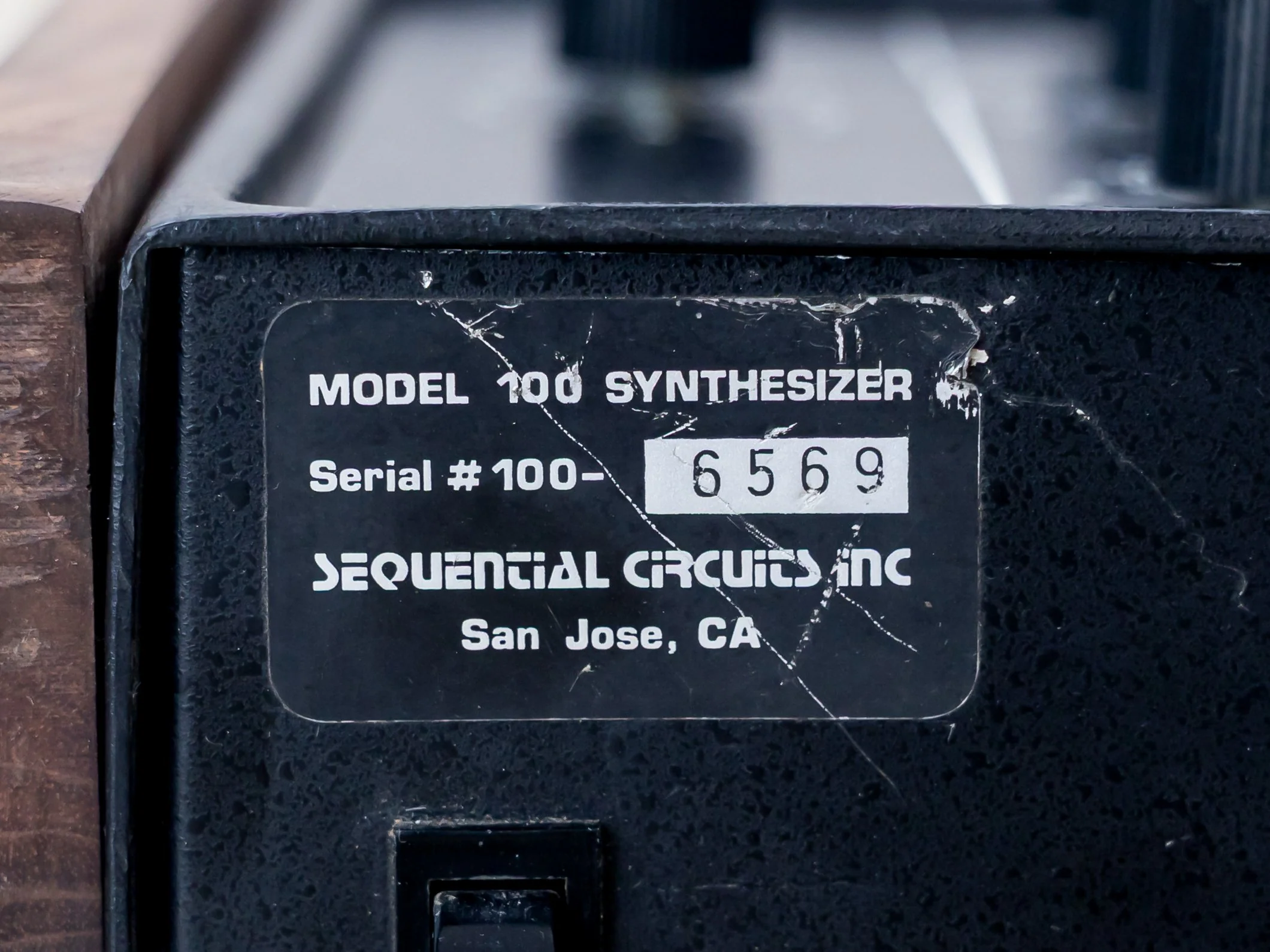
Up for sale, a circa 1982 Sequential Circuits Pro-One Model 100 monophonic analog synthesizer in excellent condition and in perfect working order. Introduced in 1980, the Pro-One was designed to be a smaller, simpler version of its renowned elder, the Prophet-5.
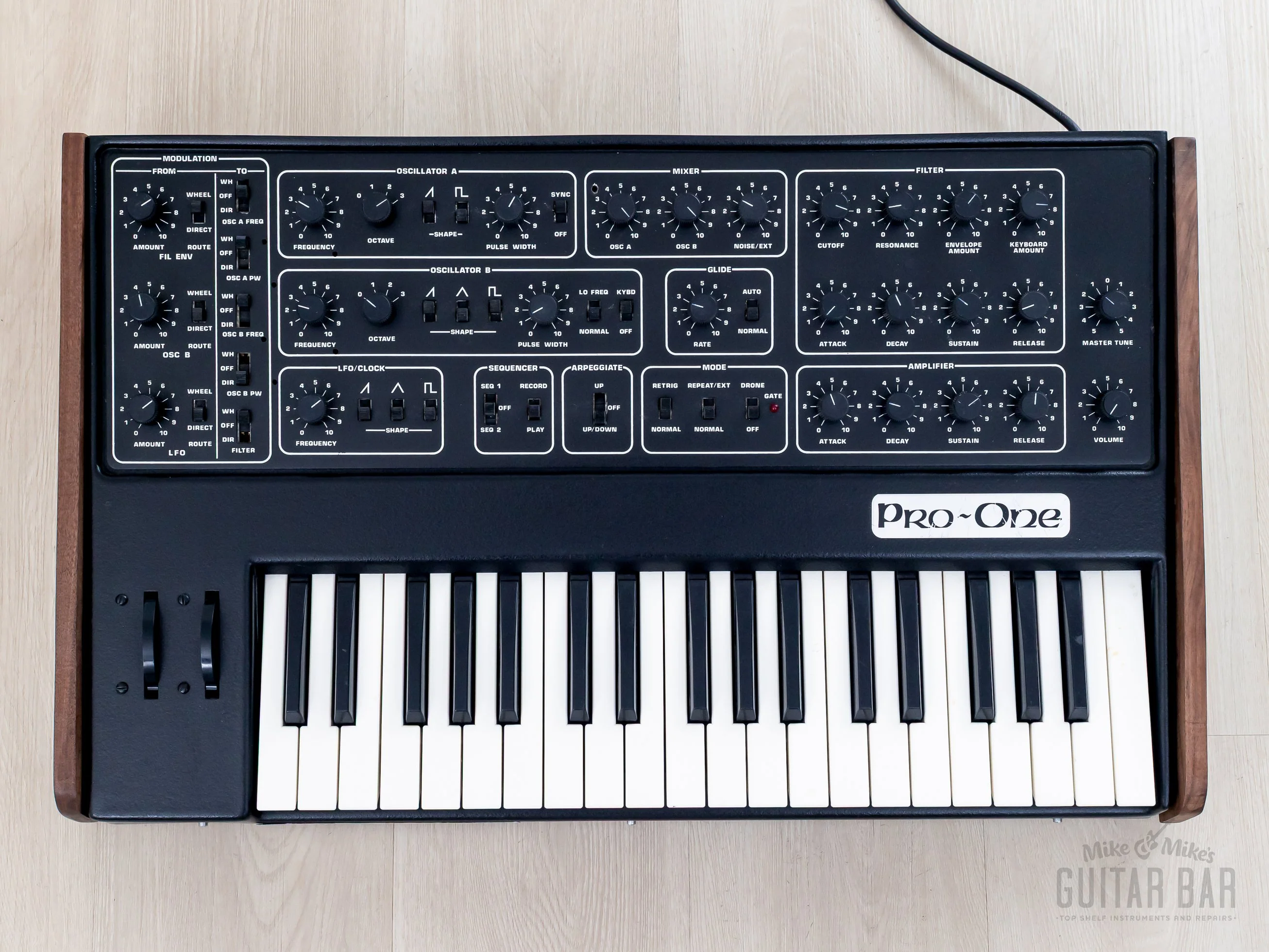
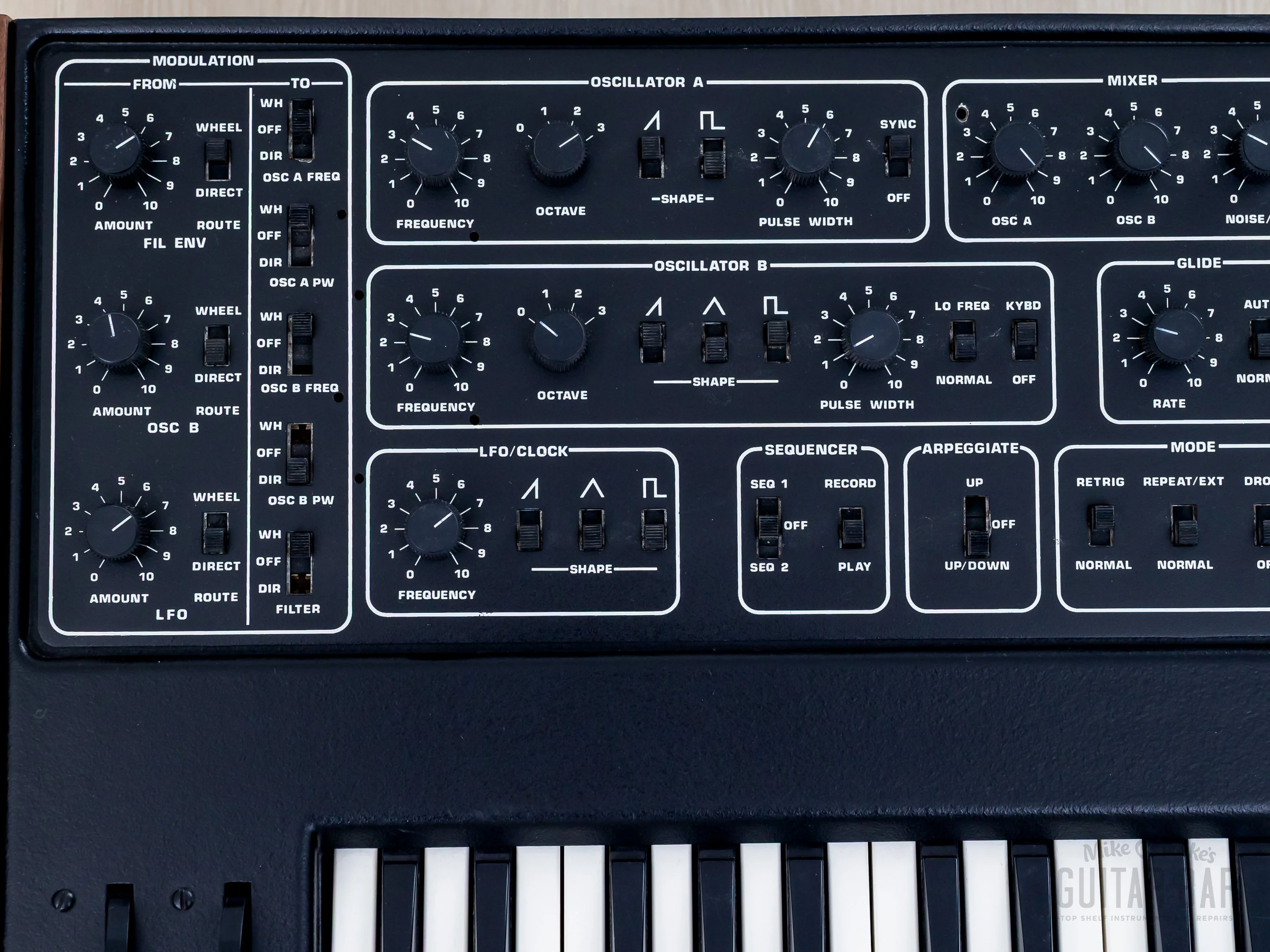
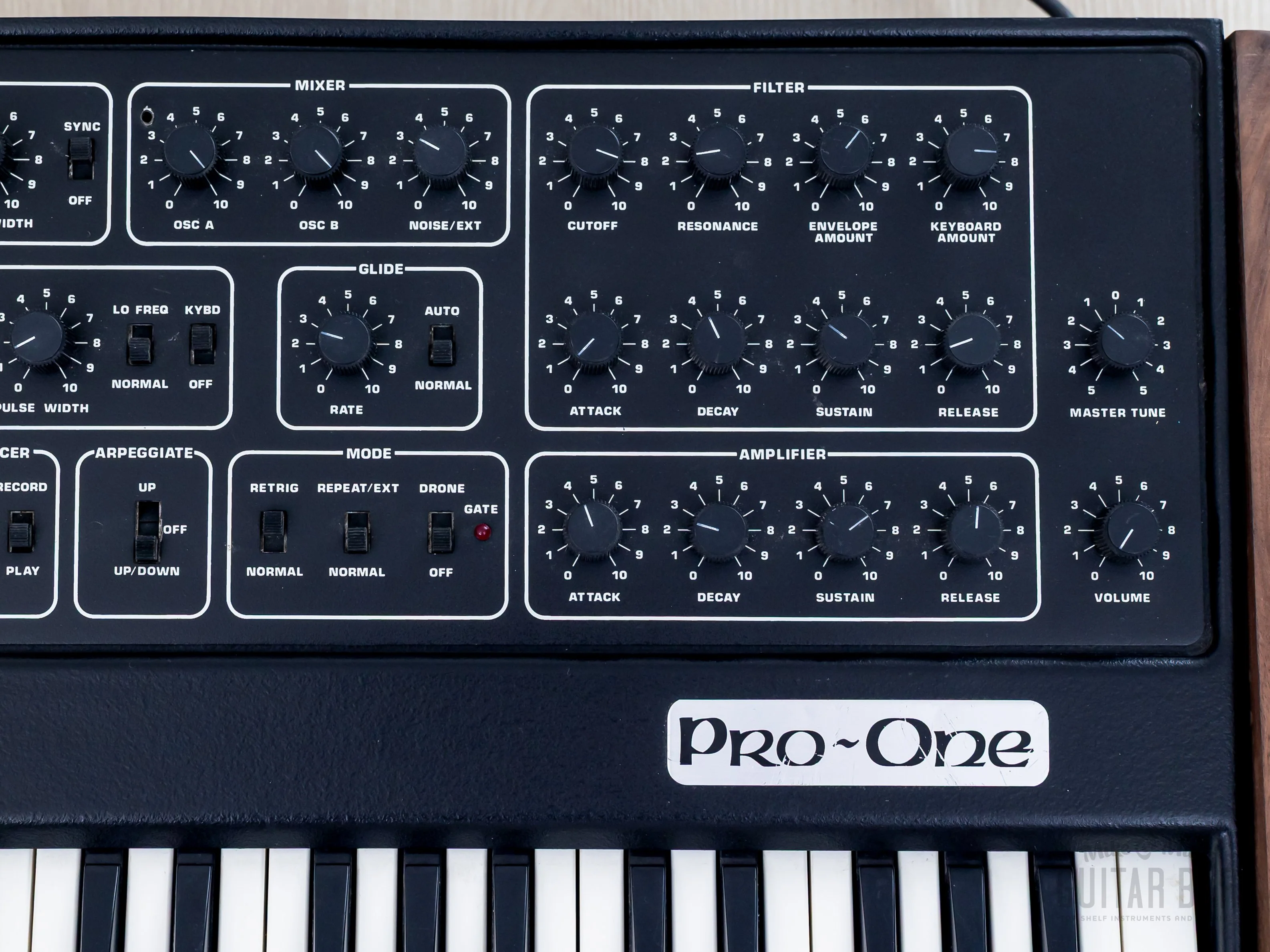
Considered one the most important monophonic synths of all time, the Pro-One can generate many of the same sounds as the Prophet-5 and Prophet-10, capable of supremely punchy bass lines and distinctly ripping leads, fueled by two VCOs, referred to as Oscillator A and Oscillator B. These VCOs and white noise can be mixed into the resonant low-pass VCF filter, which modifies the voice timber under control of its four-stage envelope generator, and the filter may also serve as a sound source. This stage is followed by a VCA, also under control of a four-stage envelope generator.
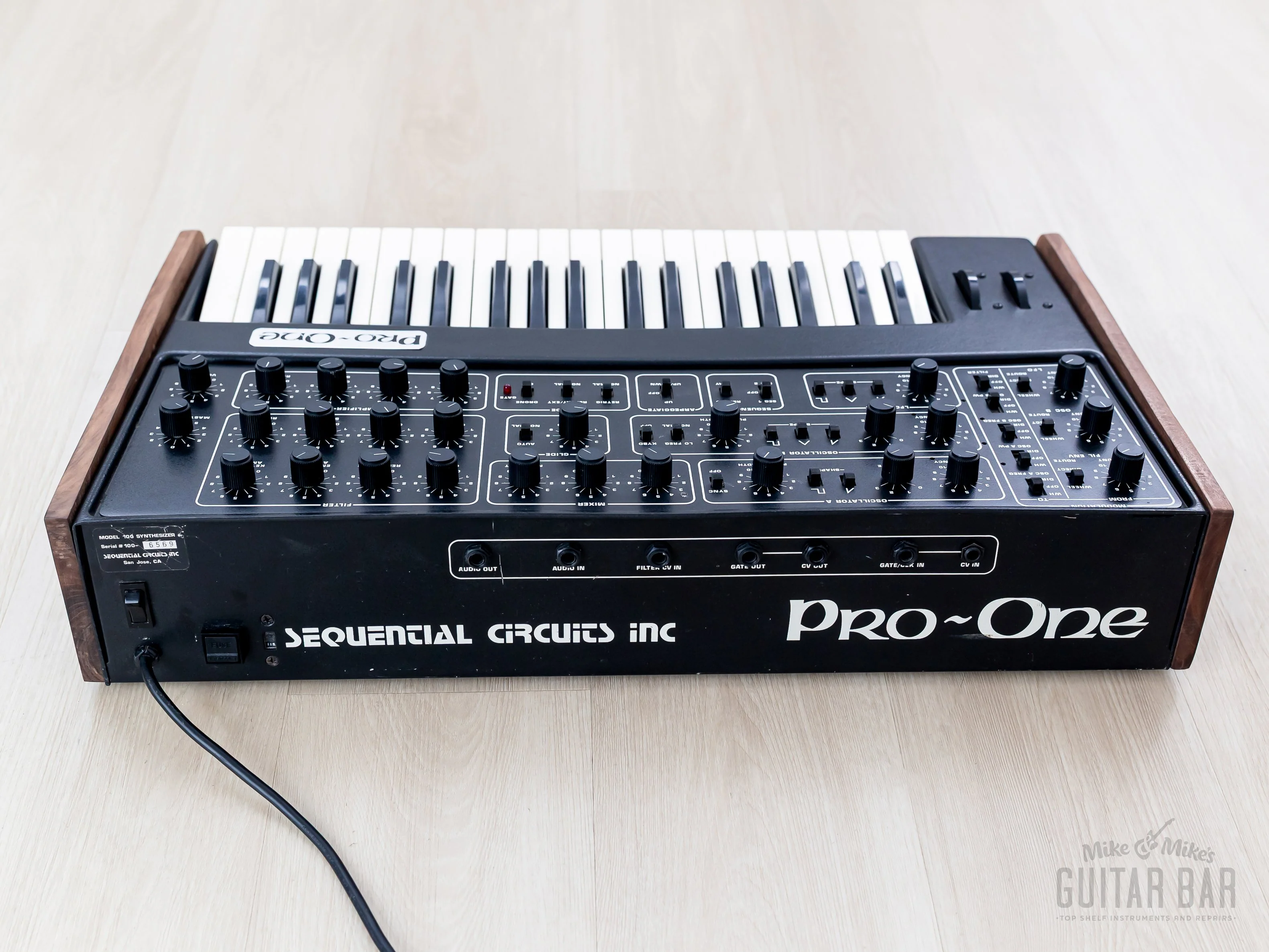
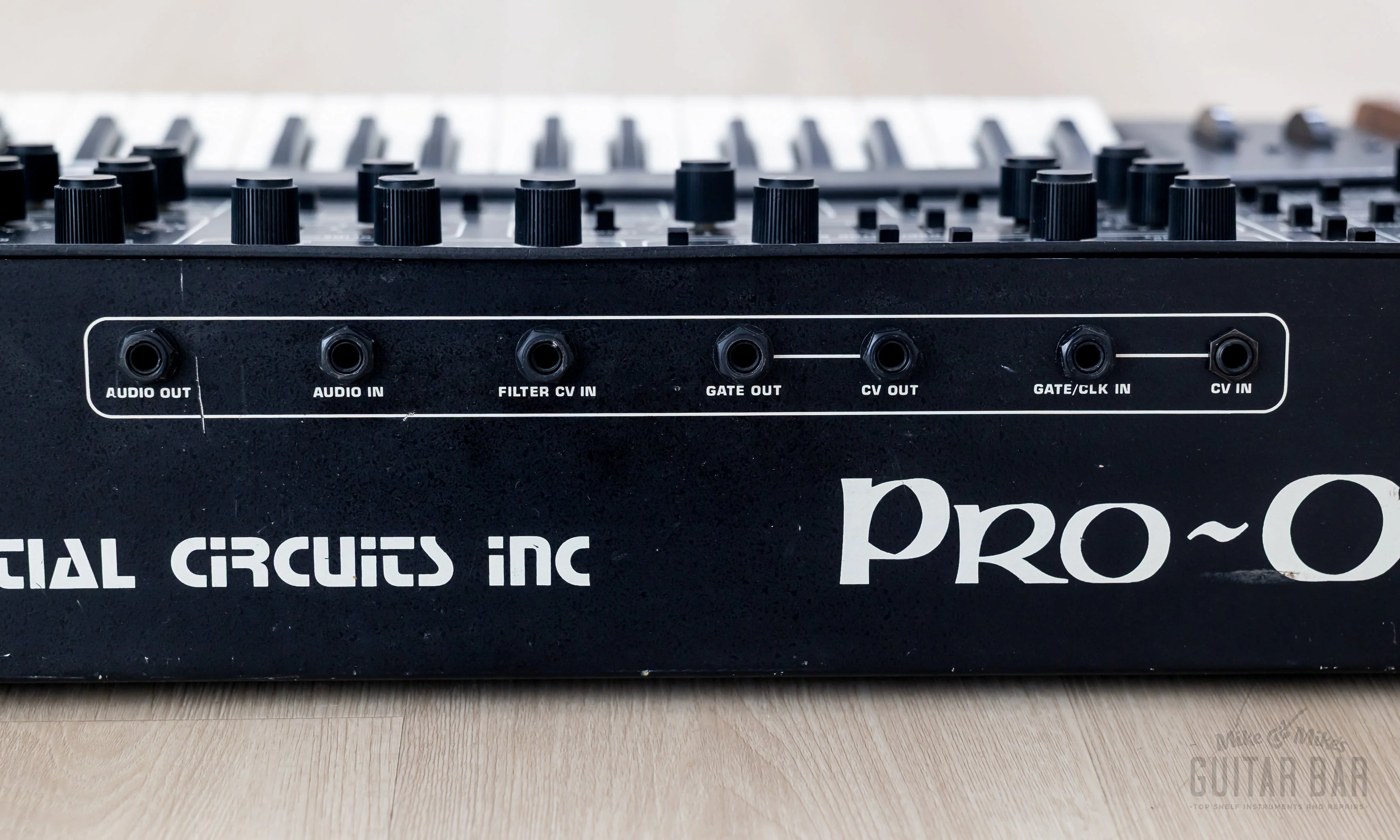
The Pro-One has extensive modulation provision with three modulation sources available, featuring Filter Envelope Generator, Oscillator B, and a separate LFO. Each can be mixed and routed for either Direct or Wheel-controlled modulation. On the back of the unit, there are Audio, Filter CV, Gate/CLK, and CV inputs.
Other features include a 40-note sequencer, an arpeggiator, Pitch and Mod wheels, Repeat and Drone switch, Single and Multiple-triggering keyboard modes, and the unique Automatic Glide, enabling one-handed complex, “tuned” pitch bending sounds.
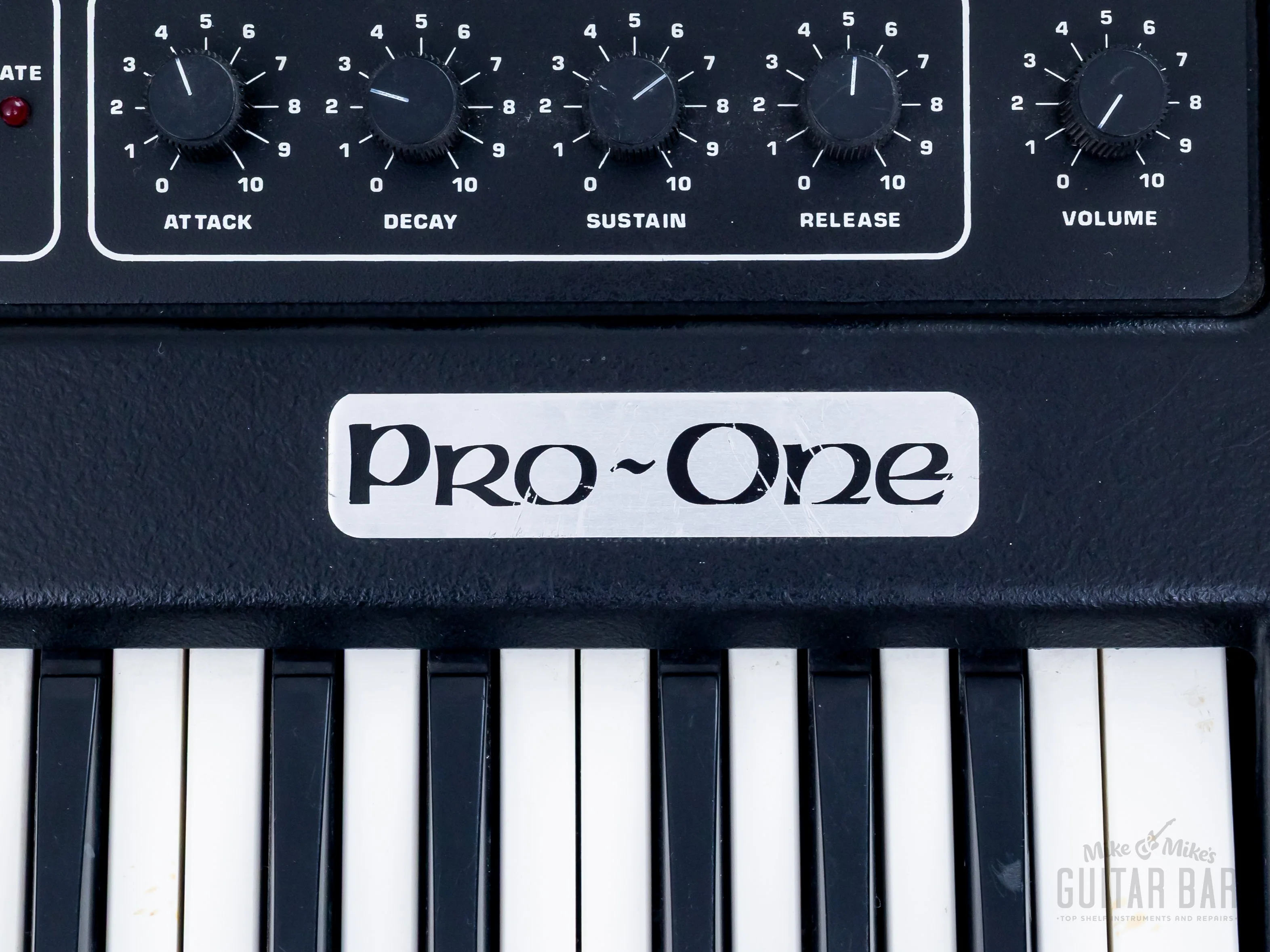
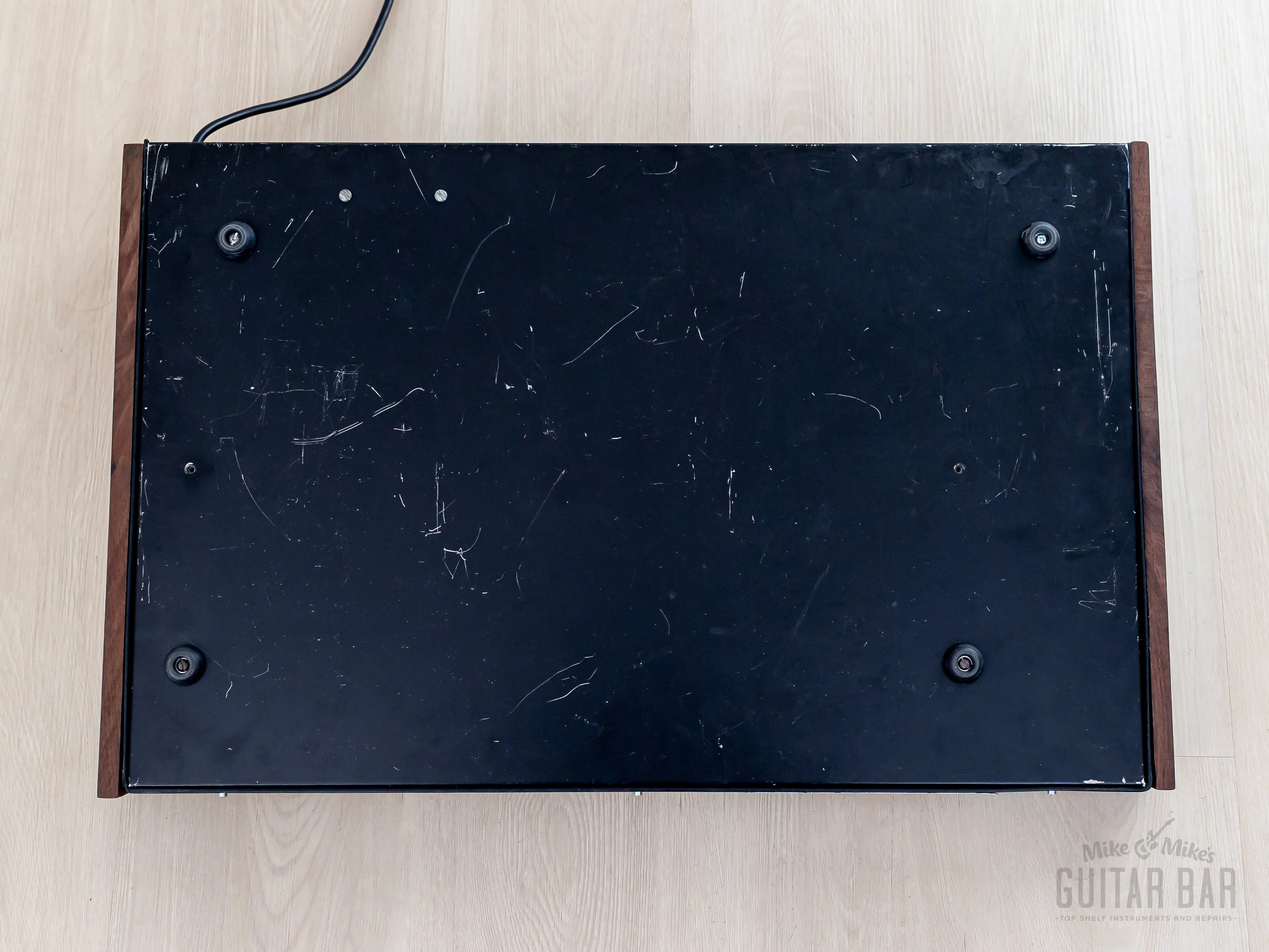
All original knobs and switches are present, and the Sequential/Pro One badges are clean, with well-kept wooden endcaps and some scuffs on the bottom of the enclosure.
Considered one the most important monophonic synths of all time, the Pro-One can generate many of the same sounds as the Prophet-5 and Prophet-10, capable of supremely punchy bass lines and distinctly ripping leads, fueled by two VCOs, referred to as Oscillator A and Oscillator B. These VCOs and white noise can be mixed into the resonant low-pass VCF filter, which modifies the voice timber under control of its four-stage envelope generator, and the filter may also serve as a sound source. This stage is followed by a VCA, also under control of a four-stage envelope generator.
The Pro-One has extensive modulation provision with three modulation sources available, featuring Filter Envelope Generator, Oscillator B, and a separate LFO. Each can be mixed and routed for either Direct or Wheel-controlled modulation. On the back of the unit, there are Audio, Filter CV, Gate/CLK, and CV inputs.
Other features include a 40-note sequencer, an arpeggiator, Pitch and Mod wheels, Repeat and Drone switch, Single and Multiple-triggering keyboard modes, and the unique Automatic Glide, enabling one-handed complex, “tuned” pitch bending sounds.
All original knobs and switches are present, and the Sequential/Pro One badges are clean, with well-kept wooden endcaps and some scuffs on the bottom of the enclosure.
$770.00
Original: $2,199.99
-65%1982 Sequential Circuits Pro-One Model 100 Vintage Monophonic Analog Synthesizer—
$2,199.99
$770.00More Images
1982 Sequential Circuits Pro-One Model 100 Vintage Monophonic Analog Synthesizer
Up for sale, a circa 1982 Sequential Circuits Pro-One Model 100 monophonic analog synthesizer in excellent condition and in perfect working order. Introduced in 1980, the Pro-One was designed to be a smaller, simpler version of its renowned elder, the Prophet-5.
Considered one the most important monophonic synths of all time, the Pro-One can generate many of the same sounds as the Prophet-5 and Prophet-10, capable of supremely punchy bass lines and distinctly ripping leads, fueled by two VCOs, referred to as Oscillator A and Oscillator B. These VCOs and white noise can be mixed into the resonant low-pass VCF filter, which modifies the voice timber under control of its four-stage envelope generator, and the filter may also serve as a sound source. This stage is followed by a VCA, also under control of a four-stage envelope generator.
The Pro-One has extensive modulation provision with three modulation sources available, featuring Filter Envelope Generator, Oscillator B, and a separate LFO. Each can be mixed and routed for either Direct or Wheel-controlled modulation. On the back of the unit, there are Audio, Filter CV, Gate/CLK, and CV inputs.
Other features include a 40-note sequencer, an arpeggiator, Pitch and Mod wheels, Repeat and Drone switch, Single and Multiple-triggering keyboard modes, and the unique Automatic Glide, enabling one-handed complex, “tuned” pitch bending sounds.
All original knobs and switches are present, and the Sequential/Pro One badges are clean, with well-kept wooden endcaps and some scuffs on the bottom of the enclosure.
Considered one the most important monophonic synths of all time, the Pro-One can generate many of the same sounds as the Prophet-5 and Prophet-10, capable of supremely punchy bass lines and distinctly ripping leads, fueled by two VCOs, referred to as Oscillator A and Oscillator B. These VCOs and white noise can be mixed into the resonant low-pass VCF filter, which modifies the voice timber under control of its four-stage envelope generator, and the filter may also serve as a sound source. This stage is followed by a VCA, also under control of a four-stage envelope generator.
The Pro-One has extensive modulation provision with three modulation sources available, featuring Filter Envelope Generator, Oscillator B, and a separate LFO. Each can be mixed and routed for either Direct or Wheel-controlled modulation. On the back of the unit, there are Audio, Filter CV, Gate/CLK, and CV inputs.
Other features include a 40-note sequencer, an arpeggiator, Pitch and Mod wheels, Repeat and Drone switch, Single and Multiple-triggering keyboard modes, and the unique Automatic Glide, enabling one-handed complex, “tuned” pitch bending sounds.
All original knobs and switches are present, and the Sequential/Pro One badges are clean, with well-kept wooden endcaps and some scuffs on the bottom of the enclosure.
Product Information
Product Information
Shipping & Returns
Shipping & Returns
Description
Up for sale, a circa 1982 Sequential Circuits Pro-One Model 100 monophonic analog synthesizer in excellent condition and in perfect working order. Introduced in 1980, the Pro-One was designed to be a smaller, simpler version of its renowned elder, the Prophet-5.
Considered one the most important monophonic synths of all time, the Pro-One can generate many of the same sounds as the Prophet-5 and Prophet-10, capable of supremely punchy bass lines and distinctly ripping leads, fueled by two VCOs, referred to as Oscillator A and Oscillator B. These VCOs and white noise can be mixed into the resonant low-pass VCF filter, which modifies the voice timber under control of its four-stage envelope generator, and the filter may also serve as a sound source. This stage is followed by a VCA, also under control of a four-stage envelope generator.
The Pro-One has extensive modulation provision with three modulation sources available, featuring Filter Envelope Generator, Oscillator B, and a separate LFO. Each can be mixed and routed for either Direct or Wheel-controlled modulation. On the back of the unit, there are Audio, Filter CV, Gate/CLK, and CV inputs.
Other features include a 40-note sequencer, an arpeggiator, Pitch and Mod wheels, Repeat and Drone switch, Single and Multiple-triggering keyboard modes, and the unique Automatic Glide, enabling one-handed complex, “tuned” pitch bending sounds.
All original knobs and switches are present, and the Sequential/Pro One badges are clean, with well-kept wooden endcaps and some scuffs on the bottom of the enclosure.
Considered one the most important monophonic synths of all time, the Pro-One can generate many of the same sounds as the Prophet-5 and Prophet-10, capable of supremely punchy bass lines and distinctly ripping leads, fueled by two VCOs, referred to as Oscillator A and Oscillator B. These VCOs and white noise can be mixed into the resonant low-pass VCF filter, which modifies the voice timber under control of its four-stage envelope generator, and the filter may also serve as a sound source. This stage is followed by a VCA, also under control of a four-stage envelope generator.
The Pro-One has extensive modulation provision with three modulation sources available, featuring Filter Envelope Generator, Oscillator B, and a separate LFO. Each can be mixed and routed for either Direct or Wheel-controlled modulation. On the back of the unit, there are Audio, Filter CV, Gate/CLK, and CV inputs.
Other features include a 40-note sequencer, an arpeggiator, Pitch and Mod wheels, Repeat and Drone switch, Single and Multiple-triggering keyboard modes, and the unique Automatic Glide, enabling one-handed complex, “tuned” pitch bending sounds.
All original knobs and switches are present, and the Sequential/Pro One badges are clean, with well-kept wooden endcaps and some scuffs on the bottom of the enclosure.